Paolo Bea
It has been a while since we have been able to offer the full lineup of Paolo & Giampero bea's wines. In 2023 i was finally able to visit this storied winery, deep in the hills of Umbria, southeast of Tuscany, just under the walled city of Montefalco. It was a bucket list visit that I got to check off. One of my favoorite wineries in the world.
Today we have a full lineup of his wines, from the white wines, skin cointact wines, the young vine sagrantino based field blend called Cotidie up to the high elevation single hilltop flagship Cerette!
All at lowest prices in the US!
It had been a dream of mine to visit Paolo Bea in Umbria, and in October 2023 I fulfilled that dream along with Olivia and our 3 kids. We were treated to a full tour, a sit down tasting of the entire lineup of wines. The wines were nothing short of amazing. Even got yelled at in Italian by his mother from the balcony of their house when we showed up too early.
Today we offer a little smattering of Bea's wines, Reds, whites, oranges, and dessert,
The white wines from Bea are all are skin contact except the Santa Chiara. They rival the best in the world, and sit at the table with the likes of Gravner and Radikon. My mind was absolutely blown by the Arboreus, a gnarly old set of Trebbiano vines that are growing wild using the existing trees as their trellises. A rare sight. The Lapideus, newer to the Bea lineup is one of the smallest production white wines Bea makes, an exotic and complex skin contact wine made from 80 year old Trebbiano Spoletino vines.
We also have a newer red wine from the eatate, "Cotidie", a young vine Sagrantino & Trebbiano blend that is fresh, vibrant, and made as sort of a contrast to Bea's deeply wild and intense reds, bringing a fresh, vibrant, and easy drinking display of Sagrantino to the table.
We have a classic offfering of Bea's reds as well, including his young vine Sagrantino dominant Rosso de Veo, his bold but ethereal Sangiovese-based Pipparello,the beastly, powerful, untamed Sagrantino "Pagliaro", the very special and rare 2011 Sagrantino Passito, and the winery's top red, "Cerette". A wine that took many years to come online, as the highest elevation Sagrantino vines in Montefalco became old enough to warrant vinifying separately. Cerette harnesses the power and ageability of Sagranitno but with more elegance and refinement than some of his bolder, more blockbuster reds. Cerette is the complete package.
Giampero Bea & his team make some of the most intensely unique wines in the world. There really is nothing like them. They are the pinnacle estate of Umbria and a flagship of Southern Italy. And dare I say, one of the top estates in Italy. Certainly one of my favorites of all time.
Here's a little background from the Importer:
Over the past 35 years, Giampiero Bea—both through his own deeply personal wines and his far-reaching influence—has become a cornerstone of our family of growers. Building on the work of his father, a through-and-through farmer whose Umbrian dialect is so thick as to be nearly incomprehensible to outsiders, Giampiero realized what made Paolo’s wines so special and built a working philosophy around it. In a series of decades that saw Italian winegrowers embracing modern technology whole-hog, Giampiero—as co-founder of the ViniVeri (“Real Wine”) group—advocated for respectful vineyard work, biodiversity, a de-emphasis on technology in the cellar, non-engagement with professional critics, and an overall trust in old, tried-and-true agrarian wisdom.
Thankfully, these principles have become far more commonplace today than they were thirty years ago, but Bea’s wines remain singular: boisterous, unabashedly wild expressions of their undulating, sun-drenched hills of origin, each new vintage of which is eagerly anticipated by a legion of loyal clients. Giampiero’s wines always proudly display their vintage, and he pointedly resists striving for a consistent “product” from year to year. There is no green harvesting and no excessive sorting, as he wants each wine to reflect the entire season’s crop and not just a choice section; fermentations begin and end without being forced in either direction, thus varying in duration notably from vintage to vintage; and the wines are bottled when they’re deemed ready to be rather than according to some schedule, with the reds in particular generally spending upwards of four years in cask. There is no regulation of temperature, no pumping, no fining, and no filtering. Giampiero relies on patience, and plenty of it, to clarify his wines, and what is in the bottle is always a full-on reflection of the fruit and the story of the season that birthed it.
Info on each wine:
PAOLO BEA WINES
Santa Chiara Umbria Bianco
A white wine produced from Grechetto, Malvasia, Chardonnay, Sauvignon and Garganega, in approximately equal proportions, planted in the Pagliaro vineyard, a site with alternating layers of gravel and clay at 1,300 feet above sea level with both east and southwest facing parcels. After crushing, the juice spends at least two weeks macerating on its lees; sulfur is never added. Fermentation occurs in small stainless steel vats at low temperatures. Two rackings are done early in the fermentation process to remove the heavy deposits and a third is done after three weeks. This wine is then left on the fine lees in stainless steel for one year before being bottled. Approximately 4,500 bottles of wine are produced annually.
Arboreus Trebbiano Spoletino Umbria Bianco
Trained up trees, vines are up to 130 years old and on pre-phylloxera rootstock.. “Arboreus” is made from a Trebbiano clone known as Trebbiano Spoletino which is trained so that the fruit hangs high above the ground. The vineyards are planted in the low hills between Trevi and Montefalco at an elevation of 650 to 700 feet with a range of parcels facing both to the east and to the southwest. The soil is essentially clay and gravel. Harvest generally occurs during the first two weeks of October. The wine is left in contact with the skins for up to three weeks or more and is then aged in stainless steel tanks for at least two years prior to bottling. Sulfur is never added. Annual production is in the range of 3000 bottles.
Lapideus Trebbiano Spoletino Umbria Bianco
“Lapideus” Umbria Bianco: Giampiero acquired a parcel of 80-year-old Trebbiano Spoletino in the town of Pigge di Trevi several years back, and thus with this 2014 we have an exciting new addition to the Bea lineup. Arising from a cooler microclimate than the “Arboreus” above, “Lapideus” spent a lengthy 35 days on it skins after pressing, followed by 210 additional days on the gross lees—a similar vinification to “Arboreus,” yet one that yielded entirely different results. Though no less deeply amber in its appearance, “Lapideus” has a leaner, racier carriage than the broad-shouldered “Arboreus,” with more filigree, a less overwhelmingly intense nose of apricots, cloves, and candied ginger. If “Arboreus” is a sea to swim in, “Lapideus” is a rocket to ride, emphasizing drive and lift over layered density. It is still a wine of impressive power, especially given its modest 12% alcohol, but the fruit is more direct, pure, and foregrounded. So often the so-called “orange wines” seem to stand alone, iconoclastic creations that defy fine-tuned peer-group comparisons and revel in their singular personalities. Even the discourse that surrounds them tends to treat them more as wines of technique than wines of terroir. Thus, it is fascinating to experience the same grape variety given roughly the same treatment by the same grower, whereby the differences in the wines are largely driven by the differences in their underlying places of origin.
Cotidie Umbria Rosso
“Cotidie” Umbria Rosso: “Cotidie” (“quotidian” in Latin) was conceived as an “everyday” wine for its relatively easygoing and drinkable spirit. The methodology behind it feels outré today but would have been common practice for the ancients to whom its Latin name pays tribute: a co-fermentation of both red and white grapes—in this case, Sagrantino and Trebbiano—grown in close proximity to one another, and yielding a lip-smacking wine that’s hard to pigeonhole. In its vibrant ruby color, it sits in the interzone between a dark rosato and a light red, and it offers the heady spice we all love in Bea’s Sagrantino, albeit on a softer, lighter frame.
Rosso de Veo Umbria
Rosso de Veo (“Veo” is the way the family’s name is pronounced in the old Umbrian dialect) is pure Sagrantino sourced from younger vines around the property and from parcels that don’t quite make Giampiero’s rigorous cut for Pagliaro, Pipparello, and Cerrete. This sun-marked 2019, clocking in at 14% alcohol and with a formidable 45-day maceration, is a potent and brooding wine that makes no concessions to polite society. Significant in its tannins, it nonetheless presents them in such a multifaceted way as to transcend their viselike grip; it offers classic sandalwood spice, mineral-saturated depth-charge stoniness, and a vivacious mouthfeel like crunching into dripping-ripe berries
.Pipparello Montefalco Rosso Riserva
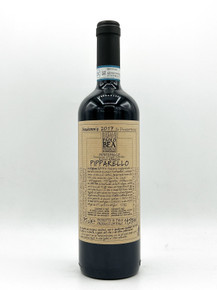
The Pipparello vineyard is a hilltop site in Montefalco at 1300 feet above sea level. The soil is clay and gravel. The vines in the vineyard are a minimum of 20 years old. Harvest takes place normally during the middle of October. The ultimate wine is a blend of roughly 60% Sangiovese, 25% Montepulciano and 15% Sagrantino. The cuvaison extends for a period between 40 to 50 days. After the alcoholic fermentation this wine spends a year in stainless steel tanks and then two years in large oak barrels and is released after an additional year of bottle-aging
Pagliaro Montefalco Sagrantino Secco
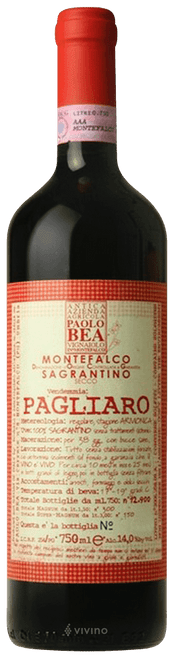
Bea produces perhaps his most renowned wine from pure Sagrantino grown on the prized hilltop site of Pagliaro, situated at 1300 feet above sea level in Montefalco proper. Bea’s wines at their best offer a panoply of spices so intoxicating, so far-reaching, so evocative, as to nearly defy belief. The only wines that approach Bea’s in that regard are perhaps the most un-sculpted Syrah-based wines of the Northern Rhône, but even those feel as if they have governors on their accelerators in comparison to top vintages of “Pagliaro.” This offers remarkable purity of varietal expression, and its wildness is reined in by its well-articulated but not overwhelming structure, and by its almost unbelievably suave (for Sagrantino!) tannins.
Cerrete Montefalco Sagrantino Secco
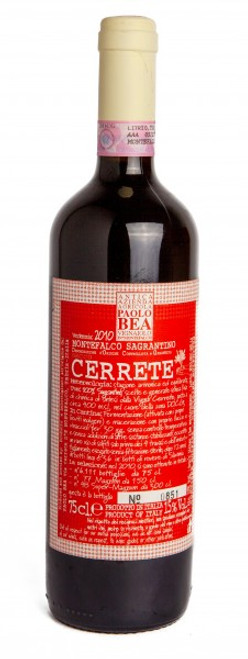
The cooler and drier position of the Cerrete vineyard, located at the highest altitude in Montefalco, take Sagrantino to new heights. Fermentation begins naturally after a 45-day maceration, then the wine spends a year in steel tanks, before resting for 43 months in large oak barrels. The resulting wine is intense in nearly every aspect, with a deep violet color, robust tannins, and power that announces itself from the first aromas through the persistent finish. Despite all of this intensity, the wine is not heavy, as the terroir provides lift and elegance that enchants the senses
Sagrantino di Montefalco Passito
This rare and very special wine, made exclusively from Sagrantino, is harvested late and left to raisin for four months before pressing. As it air dries, a white mold forms that balances and concentrates the acid, sugar and tannins. The grapes, as raisins, contain approximately 30% sugar at this point (January of the following year) and they are then de-stemmed and crushed. Fermentation begins and slowly progresses until the sugar level reaches 16% to 18%; pressing then takes place and the resulting wine carries approximately 90 grams of residual sugar. The wine is then aged in stainless steel for four years or more and then an extra in bottle. It is not produced every year and, when it is, 1,000 to 2,000 half bottles are produced.
All wines are discounted to some of the lowest prices in the US! No further discounts available.
As always, please email us with any questions. Shipping & in-store pickup are available.