|
Elio Sandri is not a new Barolo producer. He is a newly discovered old one, at least for us regular folks here in the States. Serious collectors know him, but until recently you basically had to know someone important in this business, or knock on the winery's door to buy a bottle.
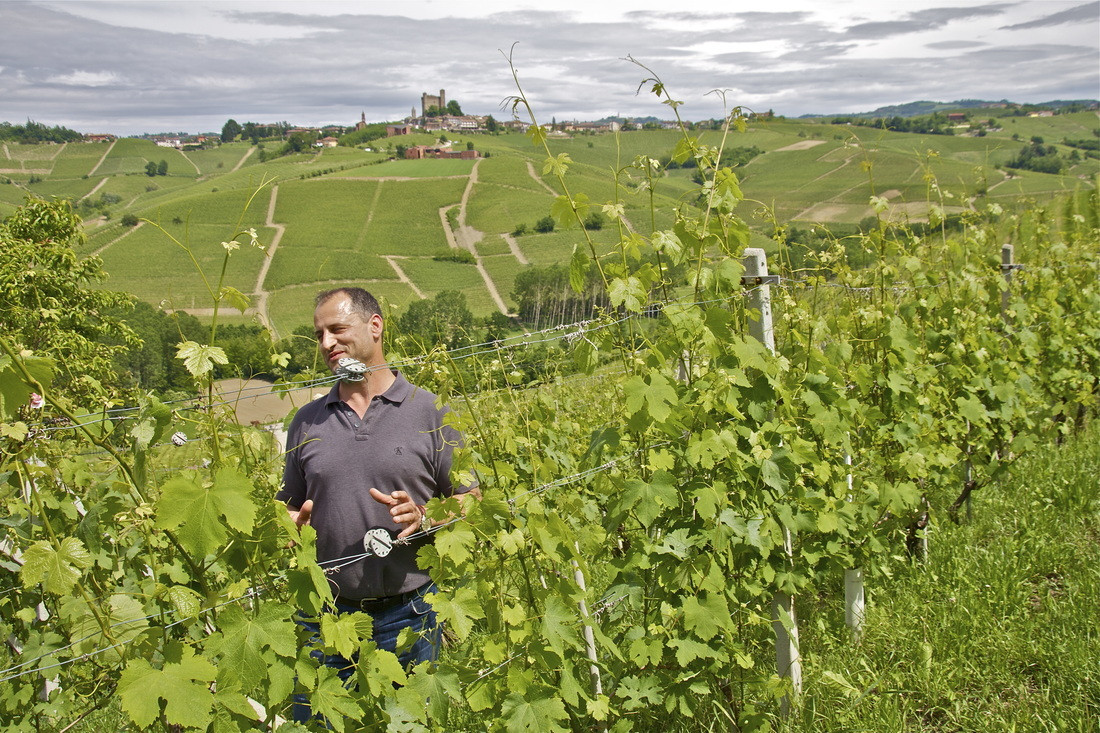
Sandri has been quietly making wine at his winery, "Cascina Disa" in the cru of Perno, in the prestigious Monforte d'Alba, for more than four decades. His family purchased the property in 1965, and Elio learned winemaking as a young teenager in 1981 after his father suddenly became ill. Today, he now runs the winery with his son Riccardo and daughter Luna. While Barolo went through its great period of modernization soon after by implementing new oak barriques, shorter macerations, rotofermenters and increasingly polished wines—Sandri simply kept doing what he had always done, right through to this day.
Today, these are some of the most compelling traditional wines I have tasted coming out of Barolo, and to me are like equivalent of discovering the wines of Cappellano in 2026.
Until very recently, they were almost impossible to find here. Thankfully, one of the iconic importers in NY and the US finally added Elio Sandri to its portfolio after years (literally) of courting, pleading and begging Elio to release some wines to him for the US.
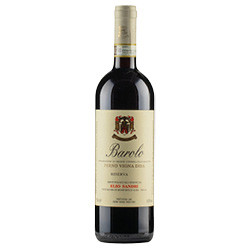
We have received a small allocation of the current releases, mostly just bottles of each, along with a collection of 2016, 2017 and 2018 cellar releases straight from Europe, including riservas, rare magnums and the old-vine Vigna Disa.
UNDERSTANDING THE TERROIR: CASCINA DISA, PERNO & MONFORTE
To understand Sandri, you have to start with Monforte d'Alba, one of the great communes of Barolo and historically the source of some of its most powerful, structured and longest-lived wines. If nearby La Morra can be about perfume and elegance, Monforte is often about architecture: tannin, acidity, iron, stone and the ability to evolve for decades.
This is serious Barolo country. Giacomo Conterno, Aldo Conterno, Elio Grasso, Conterno Fantino, Domenico Clerico and Giuseppe Principiano are all based here, working with legendary vineyards like Bussia, Ginestra, Mosconi, Castelletto, Gramolere and Ravera di Monforte.
And tucked into this same landscape, in the far less famous area of Perno, is Elio Sandri.
Perno is one of Barolo's officially recognized vineyard areas, bordered by Bussia and Rocche di Castiglione crus to the north, with Castelletto and Gramolere crus to the south. Cascina Disa sits in a secluded valley here, and unlike many Barolo domaines whose holdings are scattered across multiple vineyards and communes, Sandri's property is concentrated to just 7.5 contiguous hectares surrounding the winery. Almost everything he makes is essentially a different interpretation of one farm and one small landscape.
Nebbiolo is the main grape here, it occupies the south and east-facing slopes, with Barbera and Dolcetto in the cooler exposures in the valley. The soils move through marl, limestone, clay and sandstone, with portions of the vineyards surrounded by forest.
Sandri's farming and winemaking are simple...hands-off. Harvest is manual, fermentation is spontaneous with indigenous yeast in cement, macerations are long and the wines are raised in enormous old Slavonian oak botti. There is essentially no racking, no fining or filtration, minimal sulfur, and the Barolos can remain in vessel anywhere from roughly 18 months to six years depending on the vintage. This is true throwback winemaking in this tiny cellar.
The vintage determines what they do with the wine, not the other way around. This is why Sandri's Barolos feel so unique. They have the structure you expect from Monforte—tannin, iron, earth and mineral—but also tremendous perfume and energy: rose, cherry, raspberry, blood orange, mint, licorice, tar, wild herbs, leather and crushed stone.
Elio describes his philosophy in his own words: "My belief is to walk slowly through time. This pace of moving through life has led me to forge a strong alliance with the vineyard and with the soil that hosts it. Every gesture towards agriculture is the fruit of a gentle thought, never predatory."
THE OLD SCHOOL
If your cellar contains Bartolo Mascarello, Giuseppe Rinaldi, Cappellano, Giuseppe Mascarello, Brovia or Giovanni Canonica, Sandri should immediately make sense.
Sandri hasn't achieved the international reputation or collectability of those wineries...yet. The comparison is more philosophical. These are staunchly old-school producers who believe Nebbiolo and the vineyard should speak louder than the winemaker. They make wines with feeling, wines that will haunt your soul.
Mascarello became a symbol of resistance to modern Barolo; Rinaldi's wines became cult objects because he refused to follow fashion; Cappellano remains fiercely independent; Giuseppe Mascarello makes some of the Langhe's most classically structured wines; Brovia produces extraordinarily precise traditional Barolo; and Canonica remains tiny, artisanal and uncompromising.
Sandri belongs in this same conversation. The difference is that most collectors already know those names. Sandri remained obscure largely because the only way to get the wines was to knock on the winery's door. He isn't a young winemaker who rediscovered traditional Barolo once it became fashionable—he has been doing it this way since 1981. He's never stopped.
Antonio Galloni of Vinous Media summed it up perfectly when he said Sandri's Barolo reminded him of “the wines my dad used to drink when I was a kid.”
If you drink and collect traditional Barolo—Mascarello, Rinaldi, Cappellano, Brovia, Canonica—these are wines you should know. There's simply not much of this stuff, so stick some in the cellar while you can! Our allocations going forward will not be increasing, that's for sure, so get on the list!
|